- Mobile No: +91 86685 59482
- Email: akshay@abmind.co.in/Sales@abmind.co.in
- Address: Warje malwadi Pune 411058

SiC MOSFETs
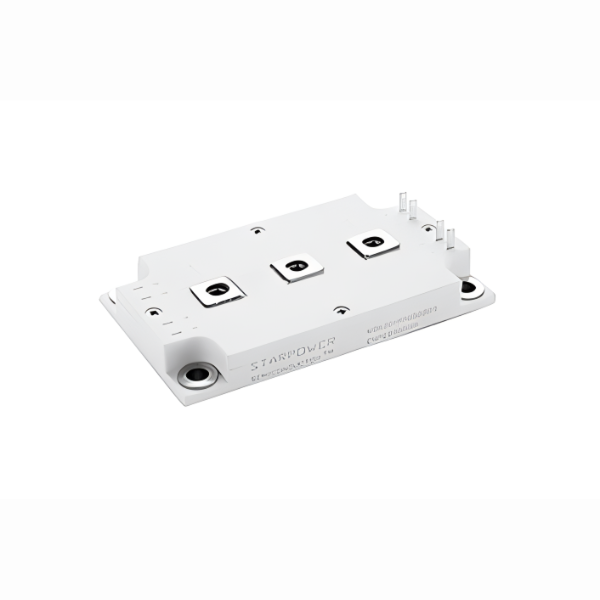
Description
SiC MOSFETs
A Silicon Carbide (SiC) MOSFET is a wide-bandgap (WBG) power semiconductor device that represents a significant leap forward in power electronics compared to traditional Silicon (Si) MOSFETs or IGBTs. By using Silicon Carbide instead of Silicon, these devices can operate at significantly higher voltages, temperatures, and switching frequencies with much lower energy losses.
Key Characteristics
- High Efficiency (Low Losses): SiC MOSFETs have significantly lower "on-resistance" ($R_{DS(on)}$) and dramatically lower switching losses. This means less energy is wasted as heat during operation.
- Higher Switching Frequency: Because they can switch on and off much faster than Silicon devices, they allow for smaller passive components (like inductors, transformers, and capacitors), leading to more compact system designs.
- Superior Thermal Performance: SiC has higher thermal conductivity, allowing the device to operate at higher junction temperatures and reducing the complexity of cooling systems (heatsinks).
- High Voltage Capability: While silicon MOSFETs are generally limited to lower voltages, SiC MOSFETs are highly efficient at ranges spanning 650V to 3300V+, bridging the gap between low-voltage MOSFETs and high-voltage IGBTs.